
Why Improv
Have you ever faced an unexpected situation,
and your first instinct was to step away and let someone else handle it?
Have you been caught off guard by a difficult experience and felt too overwhelmed to help?
Have you ever witnessed a situation that needed an urgent response but found yourself unsure what to do?
Nearly everyone has faced the unexpected and felt startled or unprepared to act. When our bodies perceive danger of any kind, our brains naturally release stress hormones that send us into fight, flight, or freeze.
Improv and theater techniques stimulate the same psychological response to an emergency, while delivering the focus, intensity, and novelty needed to build brain pathways that can put us into action in uncertain or emergency situations. Through practice and imagination in low-stakes environments, Heroic Improv eliminates the practice gap that commonly exists between skills development and real-life readiness.
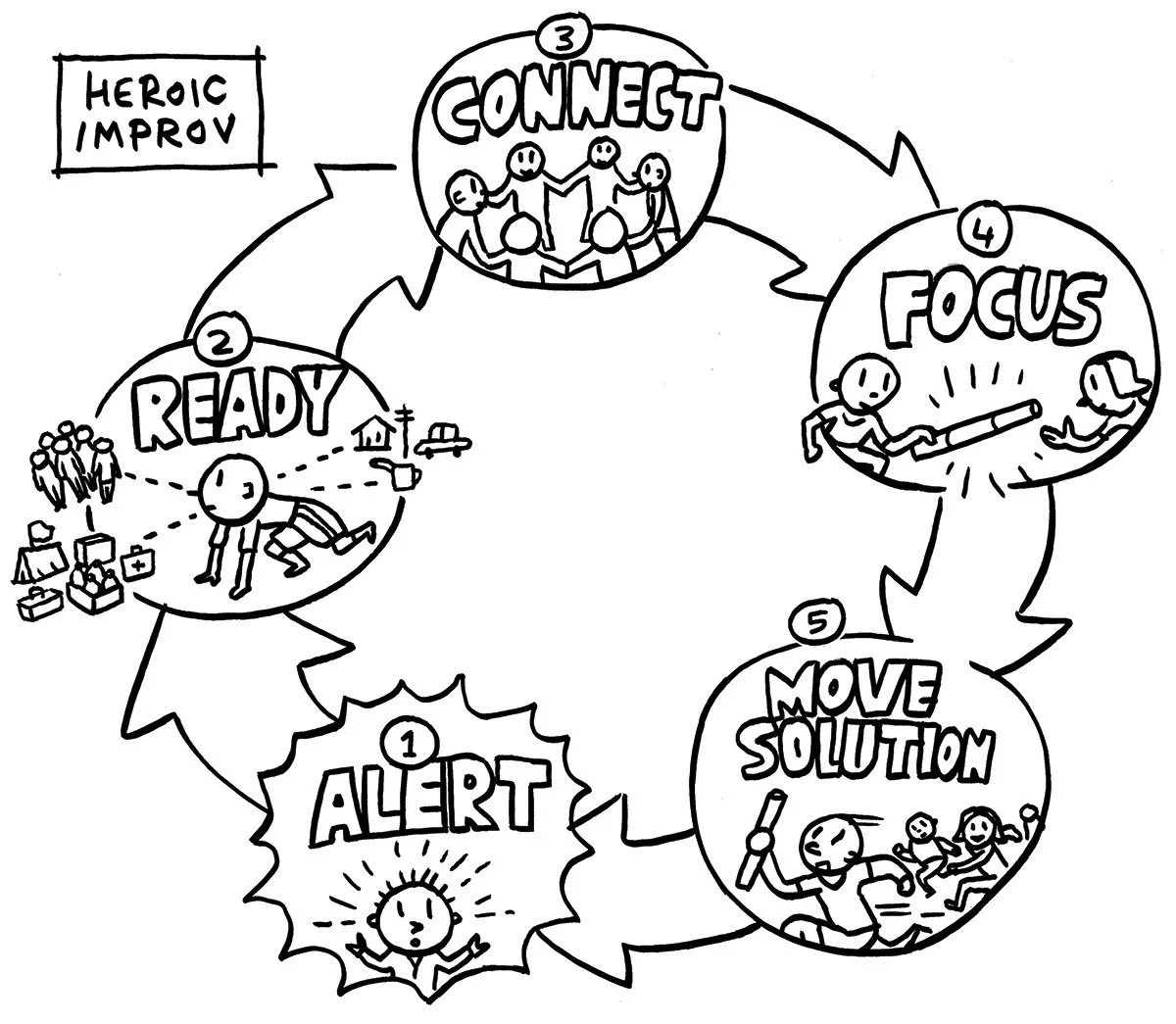
Five-Step Heroic Improv Cycle©
Dr. Tyszkiewicz’s research of rapid response rescues showed hundreds of cases where ordinary people formed small groups to perform extraordinary acts, including conducting rapid rescues in less than one minute.
Like improv, rapid rescues don’t follow a hierarchy – teams form quickly and work together to solve high-stake crises. Through fun and engaging exercises, Heroic Improv trainings follow the same five-step cycle that move groups from recognizing danger to shifting into action together:
STEP 1: ALERT – Recognize the danger signal.
STEP 2: READY – Seek potential helpers and resources.
STEP 3: CONNECT – Form a team quickly.
STEP 4: FOCUS – Center attention towards solutions.
STEP 5: MOVE – Shift into action together.
When small groups of any age practice confronting the unknown and uncomfortable in low-stakes practice, they build the capacity to act in higher stakes situations.
Research shows that once people feel confident in their abilities, they’re more ready to respond to any situation together.